
Categories
SellingPublished September 28, 2026
Off-Market Home Sale or Public Listing? How Chippewa Valley Sellers Can Decide

Updated September 2026 to reflect current NAR, Wisconsin, and Northwestern Wisconsin MLS rules.
An off-market home sale can be the right move for a Chippewa Valley seller when privacy, speed, or convenience matters more than reaching every possible buyer. For most sellers, though, listing publicly gives the home its best chance at stronger offers, and that's where I usually start. The real question isn't which option is better. It's which one fits what you need out of this sale.
Key Takeaways
- Listing publicly gives your home the widest exposure, and more qualified buyers usually mean stronger offers, better terms, and more negotiating leverage. That's my default recommendation.
- Off-market can make sense when privacy, a tight timeline, or keeping disruption to a minimum matters more than reaching every possible buyer.
- Off-market doesn't mean informal. If you're working with a listing broker, MLS rules and seller disclosures can still apply even when your home is never publicly advertised.
- Starting January 1, 2027, Wisconsin sellers who want to limit public marketing will need to make that choice in writing.
- My philosophy: Your listing, your way. Your goals drive the plan, not the other way around.
What Is an Off-Market Home Sale?
An off-market home sale is one where the property is offered for sale without being advertised to the general public. No listing on public home search websites, no yard sign, no open house, and no normal MLS distribution. You'll sometimes hear it called a private sale or a pocket listing. Put simply, the house is for sale, but you're keeping it out of public view on purpose.
To see why that matters, it helps to know how a normal listing works. Local agents share listings through the MLS, short for Multiple Listing Service, a database participating agents in the area can search. From there, listings flow out to brokerage websites and the big home search sites, which is where most buyers start looking.
Here in northwest Wisconsin, the REALTORS® Association of Northwestern Wisconsin (RANWW) operates the Northwestern Wisconsin Multiple Listing Service. That's the system most Chippewa Valley listings run through.
One common off-market version is an office exclusive listing. The seller directs the broker not to distribute the home through the MLS or market it publicly. Under current local MLS rules, the broker files a seller-signed certification with RANWW within three business days of the listing start.
From there, the listing broker and agents in the same firm can share it directly with their own clients, meaning people who have an agency agreement with the firm. The listing agent can also have one-on-one conversations with individual agents at other brokerages who might have the right buyer. What they can't do is mass-distribute it. An email blast to a group of agents or a post in a multi-brokerage listing network counts as public marketing, and that triggers the MLS rules.
Is there a middle ground?
Sort of, but locally it's about timing, not privacy. Our MLS offers a Delayed status, which works like a "coming soon" listing. The home is publicly marketed right away, on agent and public websites, but no showings happen until an availability date, up to 21 days out. That helps if you need a couple of weeks to finish packing or touch-ups while buyers start lining up.
You may also hear about national "delayed marketing" listings, which hold a home off public websites for a while. Whether an MLS offers that option, and for how long, is up to each MLS, so ask before you plan around it.
Why Do I Usually Recommend Listing Publicly?
Because exposure tends to bring stronger offers. That's my honest stance, and I tell every seller the same thing before we talk strategy.
Picture a garage sale. Put the sign out on a busy corner and you get a crowd. Tell three neighbors and you'll probably still sell the lawnmower, but you'll never know if someone down the road would've paid more. Selling a home works the same way, just with more zeros.
A public listing does a few things an off-market sale can't:
- It creates competition. More buyers looking means a better shot at multiple offers, stronger terms, and fewer contingencies.
- It gives you better price feedback. When more buyers can react to your price, you get stronger evidence of what buyers are willing to pay. That beats leaning on online estimates.
- It builds a backup plan. If your first buyer falls through, other interested buyers are already out there.
Going off-market is a bet that the right buyer is sitting inside a smaller pool. Sometimes that bet pays off. Sometimes it leaves money on the table, and you'd never know.
When Does an Off-Market Home Sale Make Sense?
When your goals outweigh maximum exposure. Here in the Chippewa Valley, I've seen it fit well in a few situations.
Privacy is non-negotiable
Some sellers don't want photos of their home online for anyone to scroll through, ever. Maybe it's personal. Maybe it's a safety concern. Either way, that's a legitimate reason, and it's your call to make.
You're living in the home while you sell
Keeping a house show-ready for weeks while you're cooking, working, and sleeping in it is exhausting. Open houses and a steady stream of showings aren't for everyone. A quieter approach can cut that down to a few showings, or even one.
Speed and convenience matter more than squeezing out every dollar
If you want a clean, quick sale with minimal disruption, a smaller, more targeted approach may get you there.
You've already received a direct offer
Sometimes a neighbor, investor, tenant, or friend approaches you before your home ever hits the market. That can be convenient, but convenience and a market-tested result aren't automatically the same thing. Before you say yes, compare the offer against recent local sales, the buyer's financing, contingencies, and the closing timeline. Then weigh it against what a public launch could reasonably bring.
What you give up with off-market is real, though. Fewer buyers see the home, so there's less competition and less proof you got top dollar. The point is to weigh that trade-off with your eyes open, not find out about it afterward. Here's the quick side-by-side:
| Factor | Public Listing | Off-Market Sale |
|---|---|---|
| Buyer exposure | Maximum | Limited |
| Advertising | MLS, websites, signs | None public |
| Competition | More likely | Less likely |
| Showings | Usually more | Usually fewer |
| Price feedback | More market feedback | Less market feedback |
| Privacy | Lower | Higher |
| Best fit | Sellers prioritizing exposure | Sellers prioritizing privacy |
General comparison. Specific rules and options vary by MLS.
How Did One Chippewa Falls Couple Decide to Sell Off-Market?
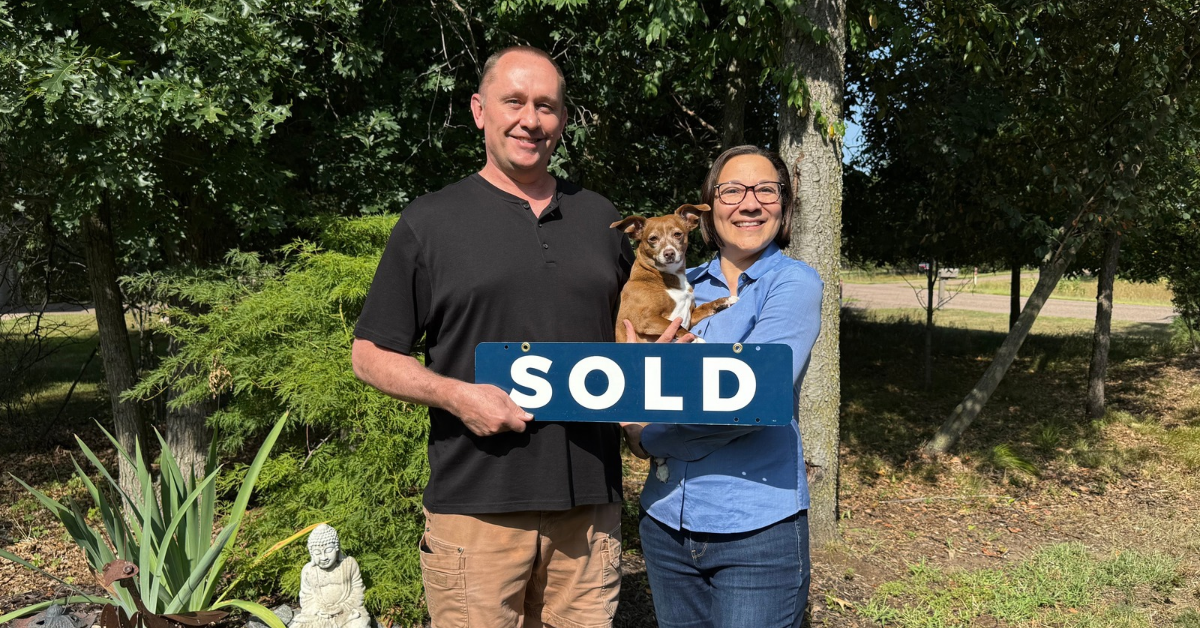
This September, I helped Wanda and Lee sell their home in Chippewa Falls. They came in with four clear priorities: price, speed, privacy, and convenience. Their goal wasn't maximum exposure. It was a strong price with as little disruption as possible, and that meant no open houses and no constant parade of people through the house while they were still living in it.
So we sat down and talked it through. I laid out the pros and cons of selling off-market versus listing publicly, including my usual recommendation to go public. Then we measured all of it against what mattered most to them. They chose off-market, and we built the plan around that decision.
In their case? One showing. And they sold for more than they expected. Here's how they put it:
"He helped us weigh all our options without pressure... Our home sold with just one showing, and we sold for more than we thought we could."
Wanda and Lee, Chippewa Falls
I want to be straight about the lesson, though. Off-market didn't work because it's a secret shortcut to a higher price. It worked because it matched their goals and the plan behind it was solid. For a seller with different priorities, listing publicly would've been the better call.
That's the whole idea behind your listing, your way. You'll get my honest opinion every time. You make the call.
What Rules Apply to an Off-Market Home Sale in Wisconsin?
More than most people expect. Off-market doesn't mean anything goes, and the rules keep evolving.
Start with the national rule. Under the National Association of REALTORS® Clear Cooperation Policy, a listing broker must submit a property to the MLS within one business day after publicly marketing it. Public marketing includes things like yard signs, public websites, social media posts, flyers, and email blasts. In other words, you generally can't publicly advertise a home while keeping it outside the cooperative MLS marketplace.
Then there's paperwork, and it's getting more specific. Right now, an office exclusive requires that seller-signed certification with the MLS. Starting January 1, 2027, 2025 Wisconsin Act 69 goes further. For residential listings with one to four units, the listing firm has to market the home on public websites within one business day of the start of the listing contract, unless the seller opts out in writing.
That opt-out form doesn't sugarcoat anything. The seller initials an acknowledgment that buyers and agents may not know the home is for sale, and that reduced exposure may mean fewer offers and a lower price. Honestly? That's the same conversation I already have with every seller. The law doesn't ban off-market sales, and you can change course later. It just makes sure the choice is yours, in writing. RANWW's Act 69 FAQ lays it out in plain terms.
Any agent suggesting an off-market sale should walk you through these rules before you sign anything.
What Does This Mean for Buyers and Sellers in the Chippewa Valley?
For sellers in Eau Claire, Altoona, Chippewa Falls, and Menomonie, it means you have options, and you deserve to hear all of them. Compared with a big metro, the pool of active buyers for a particular price range, neighborhood, or type of home can be more limited here. In my experience, that makes broad exposure especially valuable. Every extra qualified buyer who sees your home improves the odds of real competition.
The Chippewa Valley is also a place where people know people. Plenty of sellers here have lived in the same home for 20 or 30 years and aren't thrilled about their living room showing up in someone's feed. For downsizers especially, a quieter sale can take a lot of stress out of an already emotional move. More on that side of things in my right-sizing resources.
Buyers, here's your side of it. A small number of homes will change hands without ever hitting public websites. You don't need to chase every rumor, but working with a well-connected local agent means you're more likely to hear about them. And once Wisconsin's new law takes effect, public marketing becomes the default unless a seller opts out in writing.
Frequently Asked Questions
Is it better to sell a house off-market or on the MLS?
For most sellers, listing publicly on the MLS is better because more buyers see your home, which usually leads to stronger offers. Off-market makes sense when privacy, speed, or convenience outweighs maximum exposure, like when you're living in the home and want to avoid open houses. Neither option is automatically right. The best choice depends on your priorities, your timeline, and how much competition you're willing to trade for a quieter sale. A good agent should explain both before recommending one.
Do off-market homes still go in the MLS in Wisconsin?
Often, yes, at least on paper. In northwest Wisconsin, if you work with a listing broker and choose an office exclusive, the broker files a seller-signed certification with the MLS within three business days of the listing start. The home isn't distributed through the MLS or shown on public sites, and it can't be publicly marketed, though the listing agent can still reach out one-on-one to individual agents at other brokerages. A true private sale with no listing broker works differently. And if the home is publicly marketed at any point, the Clear Cooperation Policy requires MLS submission within one business day.
Do off-market homes sell for less?
They can. With fewer buyers seeing the home, there's less competition, and competition is what pushes prices up. That said, off-market doesn't guarantee a lower price. A well-priced home with a solid plan can still sell for strong money, like Wanda and Lee's home in Chippewa Falls, which sold for more than they expected after one showing. The honest answer is that you may be trading some price confidence for privacy and convenience, so go in knowing that.
Can I sell my house without open houses in Wisconsin?
Yes. Open houses are always optional, even with a public listing. You can list publicly and limit showings to scheduled private appointments with pre-approved buyers. If you want even less traffic, an off-market approach can cut showings further. Just know that fewer showings usually means fewer buyers, so talk through the trade-off with your agent. There's more than one way to protect your privacy while still getting solid exposure.
Can I start off-market and list publicly later?
Generally, yes. If a quieter approach isn't getting the results you want, you can switch to a public listing, and Wisconsin's new opt-out form doesn't lock you in either. Once public marketing starts, the listing has to be submitted to the MLS within one business day under the Clear Cooperation Policy. Starting quiet and going public later is a reasonable plan for some sellers, but set a clear timeline up front so you don't lose momentum.
Thinking about selling and not sure which path fits? Let's sit down and talk through your goals, what you'd gain, and what you'd give up with each option. You'll get my honest take, and you'll make the call. Start here, or give me a call at 715-598-6301.
Helping you home.

Brad Bemowski
Realtor and Licensed Real Estate Broker | Brad Bemowski | Homcentric Real Estate, powered by Property Executives Realty
or another way